
Marxloh Music Circus
Ludger Engels
Kurator | Regisseur
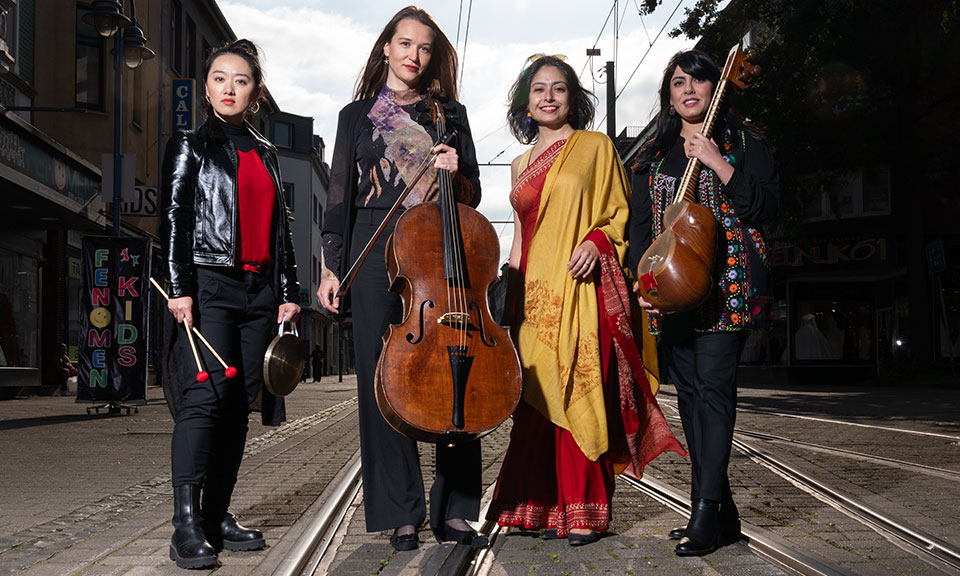
Kamalini Mukherji | Yalda Yazdani | Mahan Mirarab | Koray Berat Sari
Musikalische Kuratorinnen und Kuratoren
„Marxloh Music Circus“ verwandelt Duisburg-Marxloh erneut in einen klingenden Stadtraum
Der „Marxloh Music Circus“ ist in der Kategorie „Klassik ohne Grenzen live“ für den OPUS KLASSIK nominiert – und feiert diese Anerkennung dort, wo das Projekt seinen Ursprung hat: mitten in Duisburg-Marxloh. Wenn kurdischer Volkstanz auf Streichquartett trifft, Duduk-Klänge durch die Straßen ziehen und sich Bossa Nova, orientalische Musik und Alphörner begegnen, dann ist wieder „Marxloh Music Circus“. Am 27. Juni verwandeln zahlreiche Musiker:innen und Ensembles aus der Community aus Duisburg-Marxloh gemeinsam mit den Duisburger Philharmonikern den Stadtteil zum dritten Mal in eine große, offene Bühne.
Der Marxloh Music Circus ist kein klassisches Konzert, sondern ein Happening im Stadtteil. Musiker:innen, Tänzer:innen, Performer:innen und Bewohner:innen treten gleichzeitig an verschiedenen Orten auf. Die Inspiration kommt von John Cage und seinem Konzept „Musicircus“ (1967): Viele musikalische Ereignisse finden gleichzeitig statt und bilden eine lebendige Klanglandschaft.
Rund um das Pollmann-Eck und den August-Bebel-Platz entsteht dabei ein musikalisches Kaleidoskop, das klassische Konzertformate hinter sich lässt und neue musikalische Dialoge erlebbar macht. Ein Teil von Marxloh verwandelt sich in eine begehbare Klanglandschaft: Straßen, Plätze und Schaufenster werden zu Spielorten, Musiker:innen unterschiedlichster Herkunft treten miteinander in Dialog, internationale Musikstile ertönen gleichzeitig gefolgt von Tanzgruppen und Performances – spontane Begegnungen und gemeinsame Sessions ausdrücklich eingeschlossen. Und das Publikum bewegt sich die ganze Zeit zwischen den Aktionen.
Mit dabei sind unter anderem das „Pia Def Ensemble Marxloh“, die Kurdische „Gowend“-Tanzgruppe, das „Inner Unity Ensemble“, Duduk-Musiker:innen, Silas Pascha + Band mit Bossa-Nova, die Chöre der alevitischen Gemeinden aus Marxloh und Hamborn, die Tänzerin Bettina Rutsch, junge Künstler:innen mit kurdischer Liebeslyrik und Songs, der ägyptische Sänger Weal Elkholy und mehr als 20 Musiker:innen der Duisburger Philharmoniker in verschiedenen Besetzungen: Vom Solisten über Streichquartett bis zur Alphorn-Gruppe.
Bereits seit 2023 erforschen die Duisburger Philharmoniker gemeinsam mit Musiker:innen und Kulturakteur:innen aus Marxloh die musikalische Vielfalt des Duisburger Nordens. Unter der künstlerischen Leitung von Regisseur Ludger Engels sowie den musikalischen Kurator:innen Kamalini Mukherji, Yalda Yazdani, Mahan Mirarab und Koray Berat Sari wurden dafür in Workshops und gemeinsamen Proben neue transkulturelle Arrangements und Konzertformate entwickelt. Im Mittelpunkt steht dabei stets die Frage, wie Musik Menschen unterschiedlichster Hintergründe miteinander verbinden kann.
Der Marxloh Music Circus ist ein partizipatives Musik- und Performanceprojekt, bei dem ein Stadtteil zur offenen Bühne wird und Menschen aus verschiedenen Kulturen gemeinsam eine klangliche und performative Landschaft schaffen.
“Marxloh Music Circus” once again transforms Duisburg-Marxloh into a vibrant urban soundscape
The “Marxloh Music Circus” has been nominated for the OPUS KLASSIK award in the category “Classical Music Without Borders Live” – and is celebrating this recognition where the project first began: right in the heart of Duisburg-Marxloh. When Kurdish folk dance meets string quartet, the sounds of the duduk drift through the streets, and bossa nova, Oriental music and alphorns come together, it is time once again for the “Marxloh Music Circus”. On 27 June, numerous musicians and ensembles from the Duisburg-Marxloh community, together with the Duisburger Philharmoniker, will transform the district into a large, open stage for the third time.
The Marxloh Music Circus is not a traditional concert, but a neighbourhood happening. Musicians, dancers, performers and residents appear simultaneously at different locations. The inspiration comes from John Cage and his concept of “Musicircus” (1967): many musical events take place at the same time, creating a lively soundscape.
Around Pollmann-Eck and August-Bebel-Platz, a musical kaleidoscope will emerge that moves beyond traditional concert formats and opens up new musical dialogues. Part of Marxloh will become a walk-through soundscape: streets, squares and shop windows turn into performance venues; musicians of diverse backgrounds enter into dialogue with one another; international musical styles resound simultaneously, followed by dance groups and performances – with spontaneous encounters and joint sessions expressly included. The audience moves freely between the different activities throughout.
Participants include the “Pia Def Ensemble Marxloh”, the Kurdish “Gowend” dance group, the “Inner Unity Ensemble”, duduk musicians, Silas Pascha + Band with bossa nova, the choirs of the Alevi communities from Marxloh and Hamborn, dancer Bettina Rutsch, young artists performing Kurdish love poetry and songs, Egyptian singer Weal Elkholy, and more than 20 musicians of the Duisburger Philharmoniker in various formations: from soloists and string quartet to an alphorn group.
Since 2023, the Duisburger Philharmoniker have been exploring the musical diversity of Duisburg’s north together with musicians and cultural actors from Marxloh. Under the artistic direction of theatre director Ludger Engels and musical curators Kamalini Mukherji, Yalda Yazdani, Mahan Mirarab and Koray Berat Sari, new transcultural arrangements and concert formats have been developed in workshops and joint rehearsals. At the heart of the project is always the question of how music can connect people from a wide range of backgrounds.
The Marxloh Music Circus is a participatory music and performance project in which an entire district becomes an open stage and people from different cultures jointly create a sonic and performative landscape. Admission is free.
V.l.n.r.: Lin Chen, Hannah Freienstein, Kamalini Mukherji, Yalda Yazdani · Foto: J. Konrad Schmidt



